
Robotic Assisted Stroke Rehabilitation Using G Gaiter at Amrita Hospital Kochi
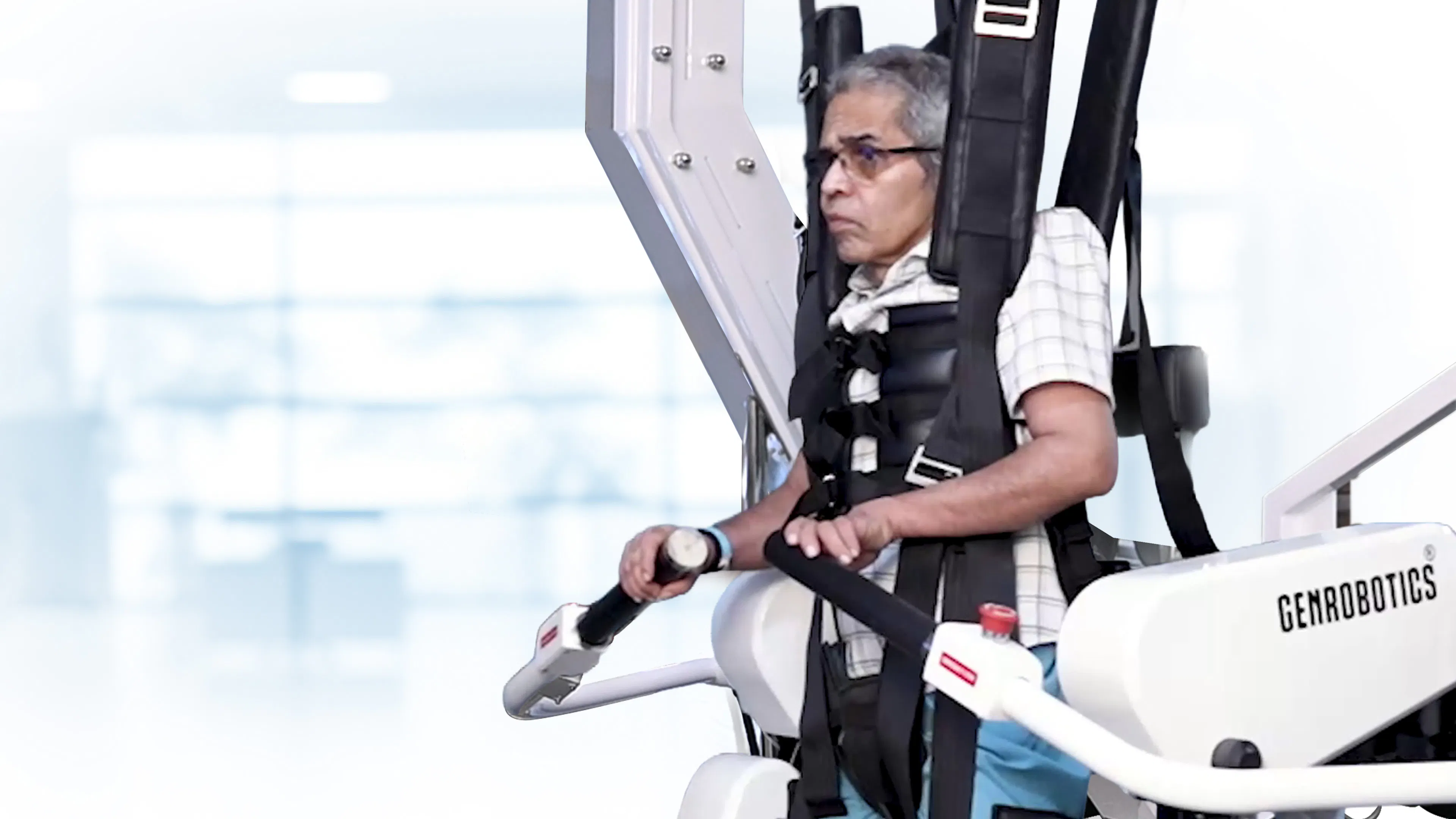
In March, while in Dubai, Muraleedan experienced a moderate stroke that changed his mobility overnight. Movements that had once required no thought, such as standing up, taking a step, or walking across a room, suddenly demanded effort and patience. During the acute phase, he required ventilator support for two days, and when his condition stabilized, it became clear that he had significant lower limb weakness and had completely lost the ability to walk independently. After undergoing inpatient rehabilitation abroad, he returned to India to continue advanced neurorehabilitation at Amrita Hospital Kochi.
Project Background
The stroke resulted in:
- Impaired motor control
- Compromised gait function
- Significant lower limb weakness
- Complete loss of independent ambulation
At the time of advanced rehabilitation, the clinical presentation included:
- No functional walking ability
- Marked lower limb weakness
- High risk of hemiplegic gait deviation
- Poor balance and weight shifting control
- Reduced confidence in mobility
Rehabilitation was supervised by Dr. Ravi Sankaran, Clinical Professor and Head of Physical Medicine and Rehabilitation.
Following one month of conventional physiotherapy, the rehabilitation team made a critical decision. To enhance gait recovery and prevent the development of abnormal compensatory patterns, robotic assisted gait training was introduced using the G Gaiter.
Technology Integration in Rehabilitation
Robot Assisted Gait Training
The G Gaiter robotic gait training system was integrated into the Physical Medicine and Rehabilitation program to provide repetitive, guided walking practice under controlled conditions.
For stroke recovery, repetition is essential. However, repetition must be accurate. Poorly reinforced movement patterns can lead to long-term gait deviations. The robotic system enabled structured stepping cycles while maintaining alignment, symmetry, and safety.
Daily Session Structure
- Duration: Approximately 30 minutes
- Frequency: Conducted regularly as per rehabilitation protocol
- Supervision: Continuous therapist monitoring
Each session focused on restoring coordinated movement through consistent, task-specific stepping practice.
Implementation and Clinical Approach
Initial Clinical Assessment
When robotic intervention began, the assessment revealed:
- Severe lower limb weakness
- Inability to initiate independent stepping
- Poor stance stability
- Hemiplegic gait pattern
Independent walking was not yet possible. Balance was limited. Confidence was fragile.
Robotic Assisted Intervention Strategy
The PMR team implemented structured robotic assisted gait training using G Gaiter, which provided:
1. Body Weight Support System
The system maintained upright alignment and ensured safe weight bearing during stepping cycles, allowing practice without risk of falls.
2. Providing Natural Gait Pattern
Step length and symmetry were regulated to reduce compensatory movements and minimize hemiplegic gait deviation.
3. Repetitive Motor Relearning
Consistent, task-specific stepping reinforced neuromuscular pathways critical for walking recovery.
Therapists closely supervised every session and progressively increased training intensity as muscle activation, coordination, and balance improved.
Impact and Rehabilitation Outcomes
Recovery did not happen overnight. It was gradual and measurable.
Improved Gait Quality
Walking pattern became more controlled and progressively closer to physiological movement mechanics.
Increased Lower Limb Strength
Muscle activation and coordination showed steady improvement through structured repetition.
Functional Mobility Progression
The patient progressed from complete dependency to short-distance ambulation.
Independent Steps Achieved
He became able to walk without the use of a cane.
Restored Confidence
Perhaps most importantly, confidence in walking returned. The combination of physiotherapy and robotic assisted gait training reduced fear and encouraged active participation in recovery.
Summary of Achievements
- Improved lower limb strength
- Reduced hemiplegic gait deviation
- Enhanced balance and step symmetry
- Achieved independent short-distance walking
- Restored confidence in mobility
Conclusion
This case demonstrates how guided, repetitive robotic assisted gait training using G Gaiter, combined with expert clinical supervision, can significantly enhance post-stroke walking restoration.
Early integration of technology-supported gait practice promoted near-normal movement patterns and functional independence. The progress reflects the value of focused neurorehabilitation, where advanced robotics and clinical expertise work together to rebuild mobility, function, and confidence after stroke.
Muraleedharan’s recovery underscores an important shift in modern rehabilitation. When precision-driven technology is integrated thoughtfully within structured clinical programs, recovery becomes measurable, progressive, and purposefully directed. It represents a restored pathway toward independent living for everyone facing mobility challenges that require structured rehabilitation.
Stroke Recovery with G Gaiter – FAQs
What is robotic-assisted gait training, and how does it help stroke patients?
Robotic-assisted gait training uses devices like the G Gaiter to guide and support walking movements. It helps stroke patients restore natural gait patterns through repetitive and controlled walking practice under therapist supervision.
How is G Gaiter different from regular gait therapy?
Regular gait therapy mainly relies on manual assistance from therapists during walking practice. The G Gaiter guides the legs through consistent and repetitive walking cycles, helping individuals practice a more natural gait pattern while the therapist monitors the training.
Which conditions can be treated with robotic-assisted gait training?
Robotic-assisted gait training is used in rehabilitation for conditions that affect walking ability, such as stroke, spinal cord injury, cerebral palsy, traumatic brain injury, and Parkinson’s disease. It is used as part of gait training to help restore walking patterns.
How often and for how long should sessions be done?
The duration and frequency of sessions are decided by the doctor or therapist based on the individual’s condition. With the G Gaiter, a session of about 20 minutes can enable around 900 steps, allowing consistent and repetitive gait training under therapist supervision.
Is robotic gait training safe?
Yes. The system provides harness support and controlled stepping, minimizing fall risk. Therapists monitor all sessions to ensure safe and effective training.
How soon can patients expect to see results?
The results depend on the individual patient and their condition. Progress varies from person to person based on factors such as the severity of the condition and the rehabilitation program followed.