
A complete range of robotic solutions to meet the specific rehabilitation needs of every patient.

The foundational model designed to provide powerful and effective gait training for adult patients, helping them regain strength, balance, and confidence.

Specially engineered with child-friendly ergonomics and therapy modes, this version provides gentle yet effective rehabilitation for our youngest patients.

Our most versatile solution. The Advanced model seamlessly adjusts to treat both children and adults, making it the ideal choice for comprehensive rehabilitation centers.
Our values are the bedrock of our culture and the blueprint for our actions. They guide every decision we make and every technology we create.


Medical robotics is the use of robots to support surgery, diagnosis, rehabilitation and patient care. In rehabilitation, robots help patients relearn movement through precise, repeatable therapy. Genrobotics focuses on rehabilitation robotics, building AI-powered gait trainers that help people take their first steps towards recovery.
Rehabilitation robotics is the use of robotic devices to help patients regain movement, function and independence. It spans lower-limb systems such as gait trainers and exoskeletons, upper-limb robots for arm, wrist and hand recovery, balance and posture trainers, and assistive mobility devices. Each guides precise, repeatable movement while measuring effort and progress, and together they are central to robotic neurorehabilitation in India for stroke, spinal cord injury, Parkinson’s, cerebral palsy and other neurological conditions. Genrobotics’ rehabilitation range covers gait trainers and upper-body systems.
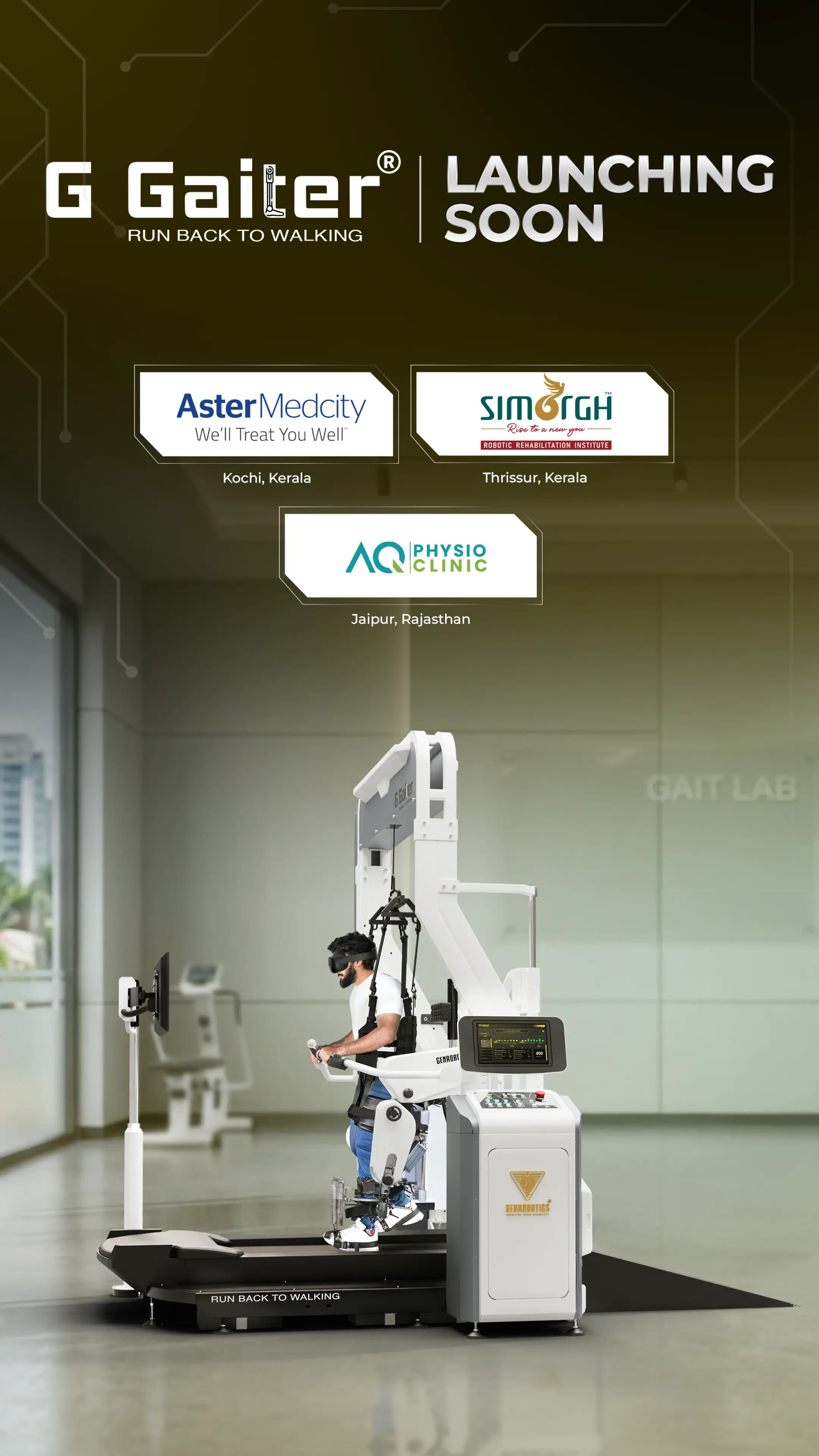
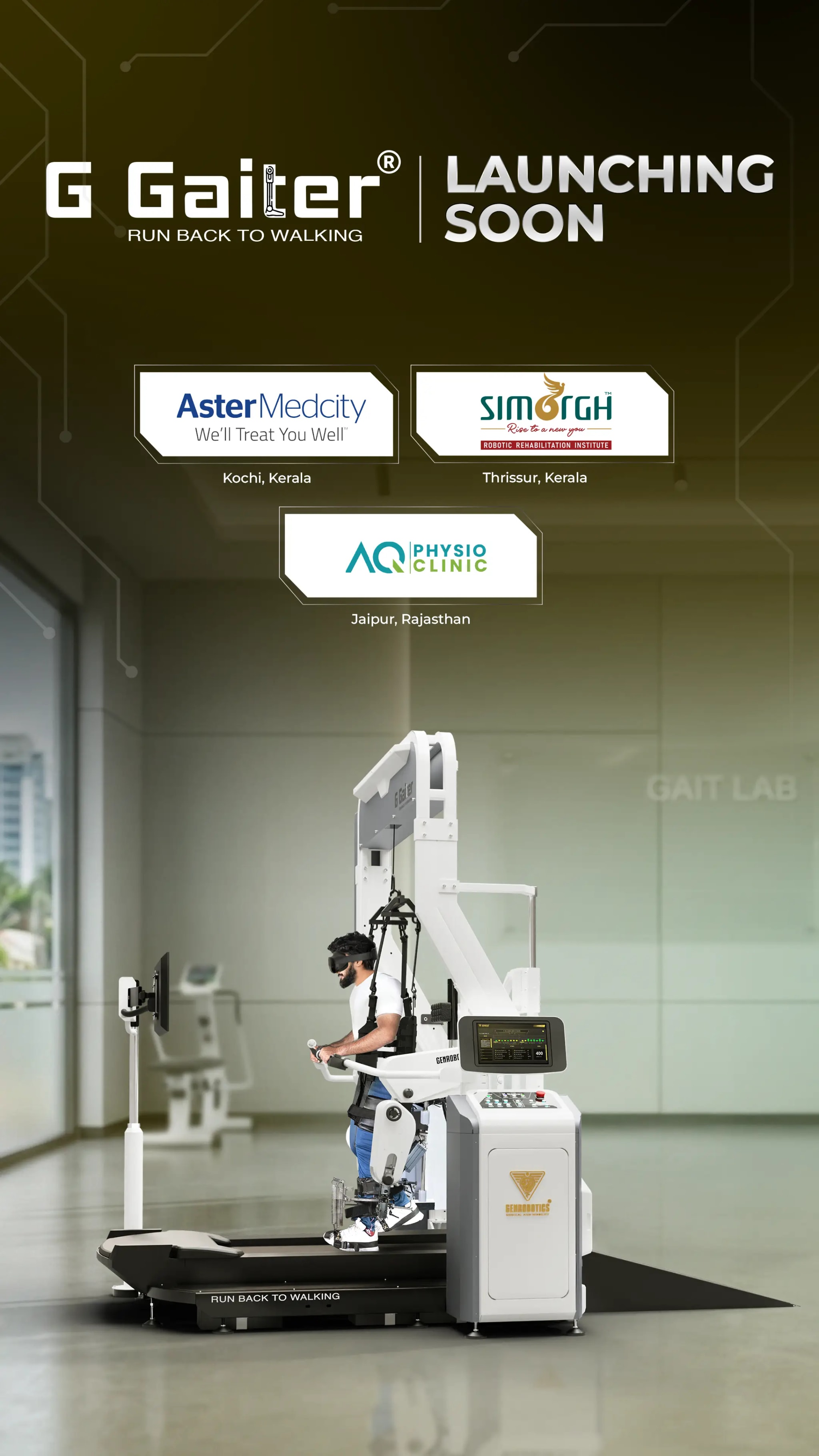
Genrobotics develops the G-Gaiter range to help patients of every age regain mobility: G-Gaiter Standard for adults, G-Gaiter Paediatric for children, and G-Gaiter Advanced, which adjusts for both. All three are clinical-grade robotic gait rehabilitation equipment for hospitals and rehabilitation centres, and each can be customised to a facility’s needs.
Genrobotics brings the robotics and AI engineering behind its sanitation fleet, with 300 robots deployed across 21 states, to rehabilitation, where the same commitment to people can help patients walk again. G-Gaiter is already in leading private and government hospitals, giving the medical division an indigenous product line with proven clinical adoption.
No. Robotics in physiotherapy takes over the physically demanding part of therapy, guiding a patient’s legs through hundreds of steps, so therapists can focus on supervising, adjusting settings and making clinical decisions. The therapist designs every programme and remains in control of every session.