Robotic-Assisted Gait Rehabilitation at General Hospital Thiruvananthapuram
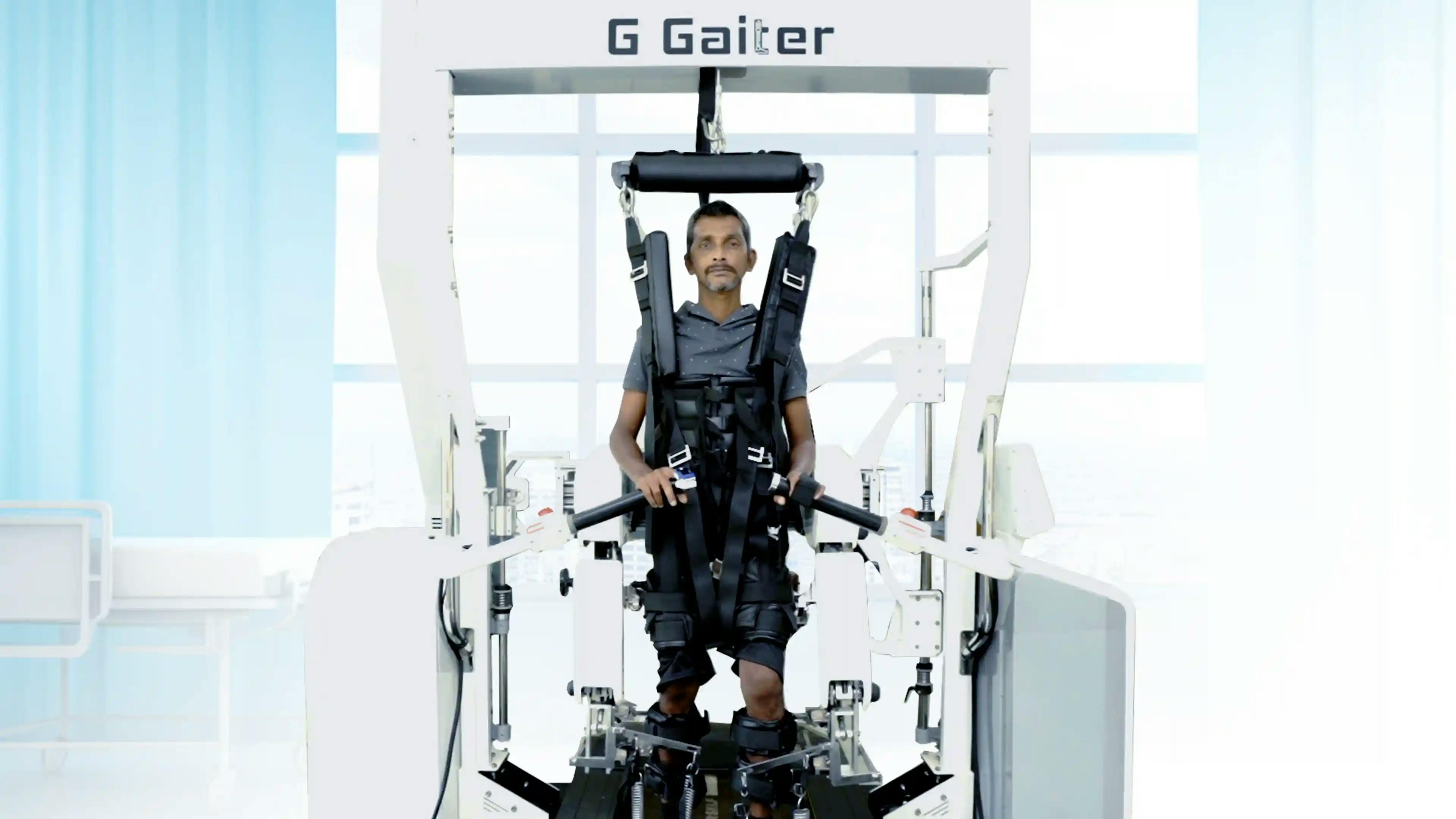
Nizamudeen, 39, from Bheemapally, suffered a stroke at work that resulted in paralysis on the left side of his body. Initial treatment included surgery and regular physiotherapy at the General Hospital and later at the Medical College. Despite these interventions, his mobility remained limited, and he was largely bedridden.
PROJECT BACKGROUND
Nizamudeen, 39, from Bheemapally, suffered a stroke at work that resulted in paralysis on the left side of his body. Initial treatment included surgery and regular physiotherapy at the General Hospital and later at the Medical College. Despite these interventions, his mobility remained limited, and he was largely bedridden.
The hospital introduced robotic-assisted gait training using the G Gaiter to provide structured, repetitive, and safe walking practice as part of his rehabilitation.
PROJECT DETAILS
Technology Introduction:
Robot-assisted gait training with the G Gaiter was incorporated after initial physiotherapy sessions showed limited progress.
Daily Session Structure:
- Duration: Approximately 20 minutes per session
- Frequency: Daily
- Session Plan: Conducted over a 20-day intensive program
IMPLEMENTATION AND OPERATION
Nizamudeen presented with:
- Hemiplegia affecting the left side
- Severe difficulty in walking and balance
- Dependence on caregivers for basic activities
The PMR team implemented robotic-assisted gait training to:
- Provide Controlled Walking Support
Ensured safe and repetitive step cycles for motor relearning. - Restore Balance and Gait Pattern
Helped retrain weight distribution and coordination for independent walking. - Enhance Motivation and Engagement
Repetitive sessions with real-time feedback encouraged consistent effort.
Therapists monitored progress and adapted each session to optimize recovery outcomes.
IMPACT AND OUTCOMES
Visible Functional Recovery
Within weeks, Nizamudeen progressed from being bedridden to walking independently and managing daily activities.
Improved Mobility
Repetitive robotic-assisted sessions helped regain balance, coordination, and leg strength.
Enhanced Confidence
He regained independence and confidence, surprising family and community members with his progress.
Public Healthcare Impact
The program demonstrated how advanced rehabilitation technology can effectively be integrated into government healthcare settings to benefit a larger population.
SUMMARY OF ACHIEVEMENTS
- Enabled recovery from hemiplegia caused by stroke
- Restored walking ability and independence
- Improved gait, balance, and coordination
- Enhanced patient motivation through structured, repetitive robotic therapy
- Demonstrated scalable use of robotic-assisted rehabilitation in public healthcare
CONCLUSION
Nizamudeen’s recovery showcases the transformative impact of robotic-assisted gait training in stroke rehabilitation. The G Gaiter provided precise, guided support for motor relearning, allowing him to regain functional independence and confidence. His journey illustrates how combining clinical expertise with advanced technology can accelerate recovery and expand access to high-quality rehabilitation in government healthcare settings.