
Robotic-Assisted Gait Rehabilitation at Punarvaas Hospital
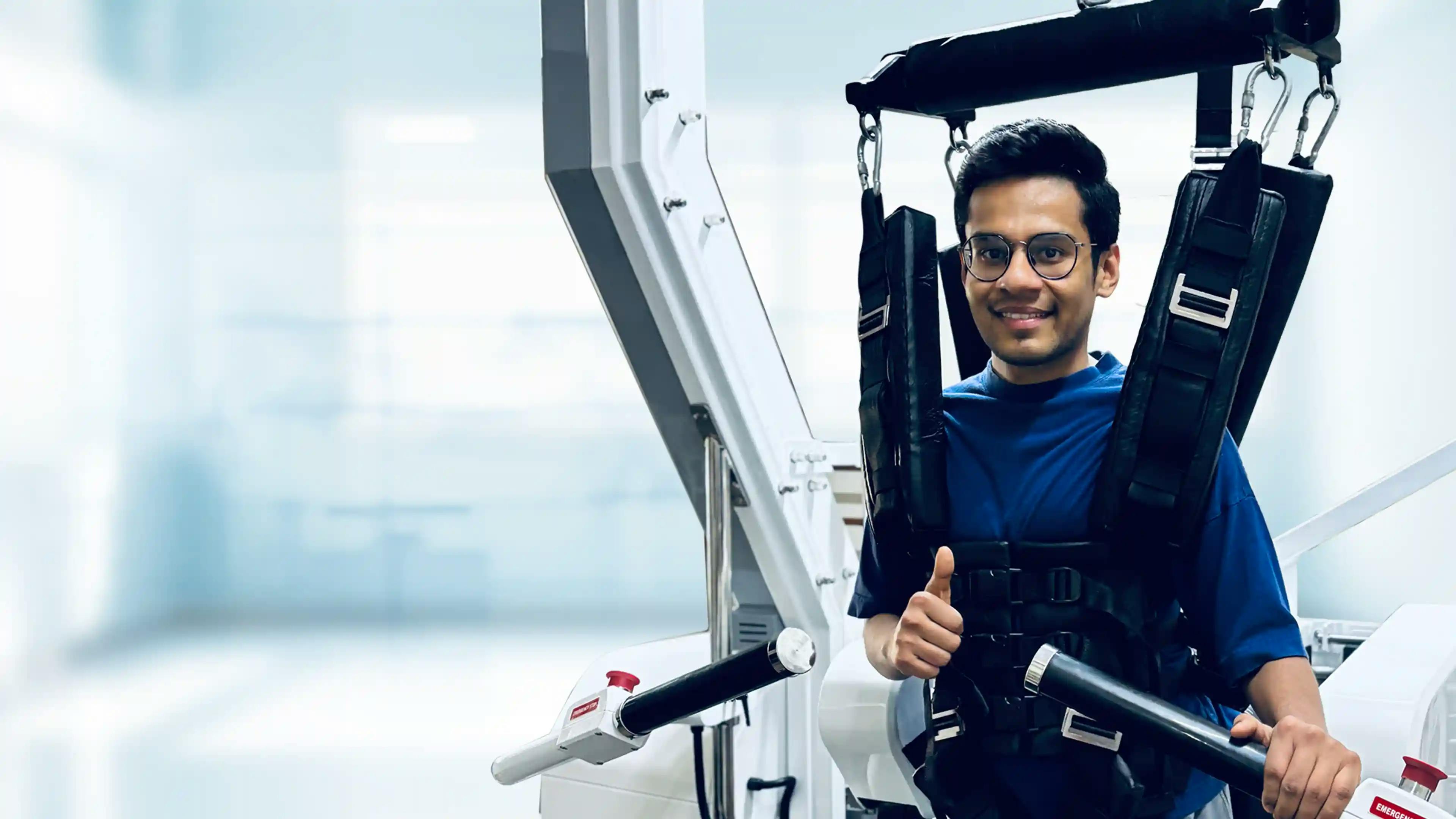
Shubhram was diagnosed with Guillain-Barré Syndrome (GBS), which caused severe weakness across his body. Standing on his toes was impossible, and eventually, his left leg became so weak he could not move it without support. Even basic activities of daily living (ADLs) were a challenge.
PROJECT BACKGROUND
Shubhram was diagnosed with Guillain-Barré Syndrome (GBS), which caused severe weakness across his body. Standing on his toes was impossible, and eventually, his left leg became so weak he could not move it without support. Even basic activities of daily living (ADLs) were a challenge.
Upon admission to Punarvaas Hospital, he was introduced to robotic-assisted gait training as part of his rehabilitation. This technology provided safe, repetitive walking practice to help retrain muscles, improve balance, and restore natural walking patterns.
PROJECT DETAILS
Technology Introduction:
Robot-assisted gait training with the G Gaiter was integrated from the start of his PMR program.
Daily Session Structure:
- Duration: 30 to 35 minutes
- Steps per session: Approximately 900
- Frequency: Daily sessions
IMPLEMENTATION AND OPERATION
Shubhram’s initial assessment revealed:
- Unsteady gait
- Tendency to lean to the sides
- Weak leg control
The PMR team implemented robotic-assisted gait training using the G Gaiter, which provided:
- Adjustable Harness Control and Sensor Feedback
Maintained proper posture and support during walking practice. - AI Technology
Monitored and guided correct gait patterns. - Infotainment Features
Enhanced engagement during repetitive training sessions, motivating sustained effort.
Therapists supervised and adapted sessions to Shubhram’s strength and progress, gradually increasing difficulty as he regained control.
IMPACT AND OUTCOMES
Improved Gait Quality
After two months of consistent robotic-assisted sessions, Shubhram’s walking became more balanced and stable.
Strength and Motor Control
Regular practice helped rebuild leg strength and refine movement patterns.
Motivation and Engagement
The interactive elements and visible progress encouraged persistence despite occasional frustration.
Functional Independence
Shubhram regained confidence in walking, contributing to overall improvement in ADLs.
SUMMARY OF ACHIEVEMENTS
- Rebuilt leg strength and coordination
- Improved gait stability and balance
- Achieved functional independence in walking
- Enhanced patient motivation and engagement through technology
- Demonstrated measurable impact of robotic-assisted gait training in PMR
CONCLUSION
Shubhram’s recovery highlights the effectiveness of combining skilled therapy with advanced robotic-assisted gait training. The G Gaiter provided precise support, guided movement correction, and ensured safe, repetitive practice, enabling him to regain independence and confidence. His journey exemplifies how early, structured, and technology-assisted rehabilitation can accelerate functional recovery and improve quality of life.